
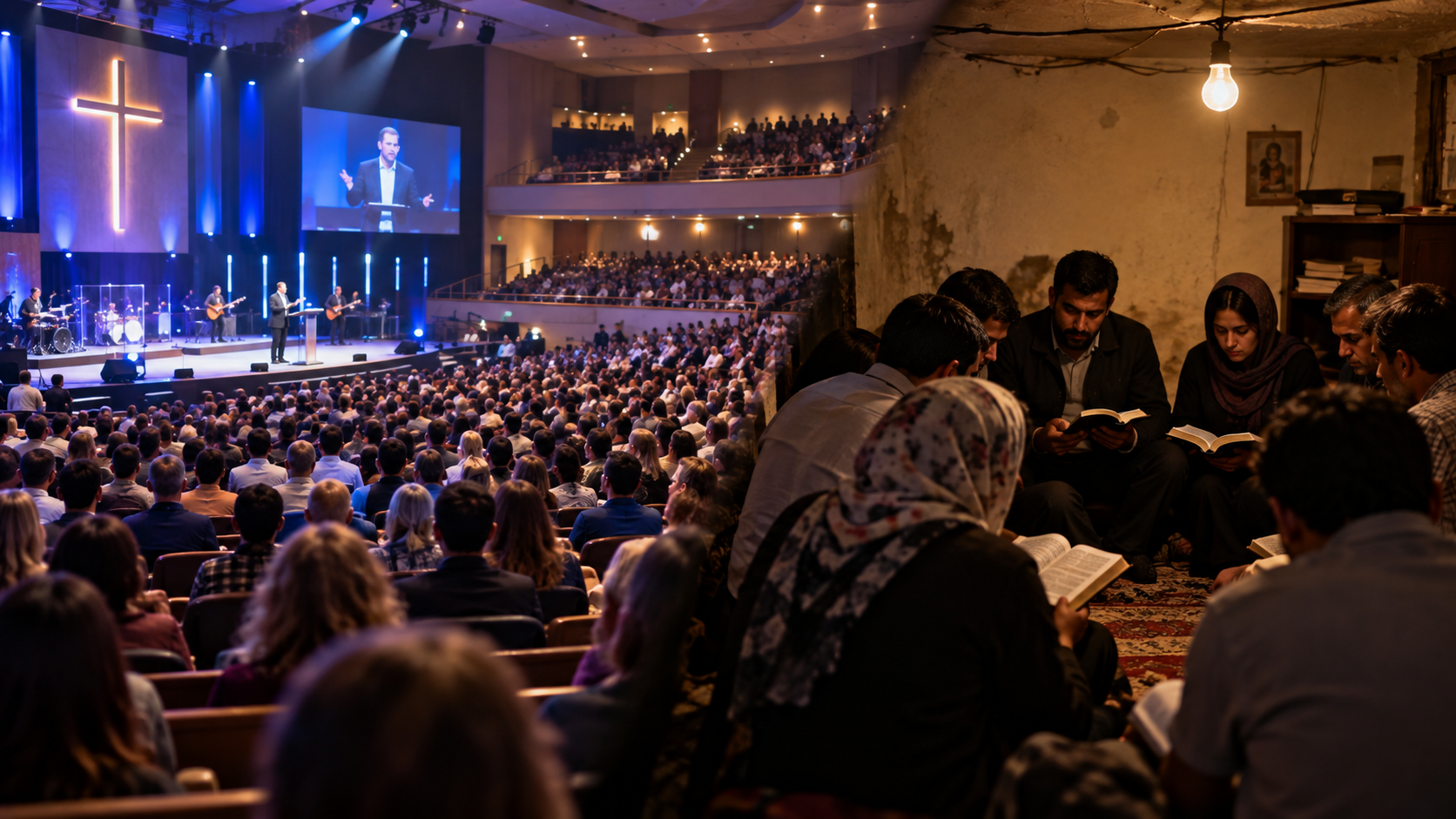
The Dangerous Transformation of Christian Leadership From Humble Service to Public Recognition
When pastors become celebrities, the church faces a difficult question: Are Christian leaders still shepherding people, or are they building platforms around themselves?
There was a time when becoming a Christian leader meant accepting responsibility for other people’s lives, even when that responsibility came at a personal cost.
Today, in certain corners of Christianity, becoming a pastor can look remarkably similar to becoming a celebrity.
There are stages, cameras, professional branding teams, bestselling books, expensive conferences, personal merchandise, and millions of social media followers. Some religious leaders are recognized more for their personalities than for the communities they serve.
Their names become brands. Their sermons become products. Their churches become platforms.
And somewhere in this transformation, an important question has been forgotten:
When pastors become celebrities, who is left to shepherd the church?
This is not an attack on every well-known pastor. Public recognition is not inherently wrong, and technology can help Christian teaching reach people who might otherwise never hear it.
The problem begins when recognition stops being a consequence of service and becomes the purpose of leadership.
When being admired becomes more important than being accountable, something fundamental has changed.
Jesus Never Asked His Disciples to Become Famous
When Jesus called His disciples, He did not promise them popularity.
He did not offer them prestigious positions, luxurious lifestyles, or opportunities to build personal brands.
Instead, He told them to follow Him.
The invitation was simple, but the consequences were enormous.
Following Jesus required sacrifice, humility, courage, and a willingness to serve others.
In Mark 10:43–44, Jesus taught that whoever wanted to become great among His followers must become a servant.
This was a revolutionary understanding of leadership.
Greatness was not measured by how many people served the leader, but by how faithfully the leader served others.
Yet in some modern Christian environments, the opposite appears to be happening.
The leader becomes the center of attention.
The congregation becomes the audience.
And the church gradually begins to revolve around one individual’s image.
Christian leadership was never intended to turn the shepherd into the most important sheep in the field.
A pastor’s calling is not to become untouchable, unquestionable, or indispensable.
It is to guide, protect, teach, and care for people.
When the Pastor Becomes More Important Than the Message
Consider how some churches promote themselves.
The pastor’s face appears on enormous banners. Their name dominates the website. Their photograph is featured in nearly every announcement. Their personal accomplishments become central to the organization’s identity.
There is nothing automatically wrong with identifying a church’s leader or communicating their work.
But when the leader’s personality becomes the primary attraction, the congregation risks becoming dependent on a person rather than committed to a mission.
People may begin attending because they admire the pastor’s speaking style, appearance, charisma, or public reputation.
Over time, admiration can become unquestioning loyalty.
And unquestioning loyalty is dangerous in any institution, especially one claiming spiritual authority.
A healthy Christian community should be able to ask difficult questions.
How are decisions made?
Who holds the pastor accountable?
How are donations used?
Can members respectfully disagree with leadership?
What happens when the pastor makes a mistake?
If asking these questions is treated as rebellion, the church may be protecting a personality rather than practicing Christian accountability.
A pastor who cannot be questioned has moved dangerously close to becoming someone who cannot be corrected.
No human leader should occupy that position.
The Difference Between Having Followers and Making Disciples
Social media has transformed the meaning of influence.
Today, a pastor can reach millions of people without ever meeting most of them.
That reach can accomplish tremendous good. Biblical teaching, encouragement, education, and pastoral resources can cross geographical and cultural boundaries.
But influence and discipleship are not the same thing.
A person can have two million followers and still have little knowledge of the personal struggles of the people who listen.
A church can fill an auditorium every Sunday while some members remain isolated, spiritually neglected, or afraid to ask for help.
A sermon can receive millions of views without necessarily producing meaningful relationships or lasting spiritual growth.
The numbers may be impressive.
But what do they actually measure?
Jesus did not command His followers merely to attract audiences.
In Matthew 28:19–20, He commanded them to make disciples and teach people to observe His instructions.
Discipleship requires more than inspiration.
It requires patience, correction, relationships, compassion, and responsibility.
Sometimes it means sitting beside someone in a hospital.
Sometimes it means listening to a struggling marriage.
Sometimes it means helping a family who cannot afford groceries.
Sometimes it means supporting someone who has lost faith in themselves.
These moments rarely become viral videos.
They do not always attract donors.
They may never produce public recognition.
But they are essential expressions of pastoral leadership.
A million people may recognize a pastor’s face. That does not necessarily mean a million people have been shepherded.
What Underground Churches Teach Us About Leadership
For more than two decades, my involvement with Iranian underground Christianity has given me an opportunity to observe leadership under very different circumstances.
In Iran, many underground Christian leaders cannot publicly advertise their positions.
Their names cannot safely appear on large billboards.
They cannot build their ministries around public recognition without risking serious consequences.
Some must keep their religious activities hidden from neighbors, employers, and even extended family members.
In this environment, leadership is rarely accompanied by fame.
A house-church leader may spend years teaching Scripture, supporting families, encouraging new believers, and helping others grow in their faith without receiving any public acknowledgment.
There may be no applause.
No professional photography.
No recognition ceremony.
No audience beyond a small gathering in someone’s home.
Yet the responsibilities are real.
These leaders may be expected to respond when members face personal crises, fear, isolation, or religious pressure.
Their influence is built primarily through relationships and trust.
Of course, underground churches are not perfect. Secrecy can also create accountability challenges, and small communities can experience unhealthy leadership just as larger institutions can.
But the absence of public fame reveals a powerful truth:
Christian leadership can exist without celebrity. In fact, some of its most meaningful work takes place where nobody is watching.
This raises a question worth considering.
If every camera disappeared tomorrow, if every social media account were closed, and if every opportunity for public recognition vanished, how many leaders would continue serving with the same dedication?
The answer matters.
Because it helps distinguish the desire to serve from the desire to be seen serving.
When Admiration Becomes Spiritual Dependence
One of the greatest dangers of celebrity Christianity is not simply that pastors become famous.
It is that followers may gradually become emotionally and spiritually dependent on them.
The pastor’s opinions begin to carry extraordinary weight.
Their interpretation of Scripture becomes difficult to challenge.
Their personal decisions are defended even when legitimate concerns arise.
And criticism of the leader may be interpreted as criticism of Christianity itself.
This creates a dangerous confusion between loyalty to God and loyalty to a human being.
No pastor, regardless of their knowledge, charisma, accomplishments, or influence, should become the foundation of another person’s faith.
Pastors are human.
They make mistakes.
They experience pride, fear, temptation, and weakness.
They need accountability as much as anyone else.
When a congregation treats its leader as incapable of wrongdoing, it places that person in an unhealthy position.
And when a pastor encourages that attitude, the danger becomes even greater.
A healthy pastor should want people to develop spiritual maturity, not permanent dependence on the pastor’s personality.
The goal of Christian leadership should be to help people grow strong enough to understand their faith, ask questions, and make responsible decisions.
A shepherd should help the flock grow, not teach the flock that it cannot survive without the shepherd.
The Cost of Building a Personal Kingdom
Celebrity-driven leadership can also change how a church uses its resources.
Money that could support struggling families, education, humanitarian assistance, or discipleship may instead be directed toward maintaining an expensive public image.
Branding, production, promotional campaigns, exclusive events, and the lifestyle of a prominent leader can become increasingly important.
These expenses are not automatically improper. Large organizations have legitimate operational needs, and effective communication can be costly.
But the central question remains:
Are these resources advancing the mission, or are they primarily maintaining the leader’s reputation?
There is a difference between building a church and building a personal kingdom.
A church should continue its work even after its pastor retires, resigns, or dies.
A personal kingdom struggles to survive without the individual at its center.
A healthy leader develops other leaders.
An insecure leader may feel threatened by them.
A healthy leader shares responsibility.
An insecure leader concentrates power.
A healthy leader welcomes appropriate oversight.
An insecure leader may interpret accountability as disloyalty.
The true strength of leadership is not demonstrated by how many people depend on one person.
It is demonstrated by how many people have been equipped to serve without that person.
The People Nobody Sees
Every Sunday, across the world, countless Christians serve without receiving public recognition.
They clean gathering spaces.
They prepare food.
They teach children.
They visit the sick.
They help elderly neighbors.
They support refugees.
They distribute Bibles.
They pray with people who are suffering.
Many will never write a bestselling book or speak before thousands.
Some will never even be publicly thanked.
Yet their contributions may be more meaningful to an individual life than the most widely viewed sermon on the internet.
I think about the underground Christian leaders who cannot reveal their names.
Some have dedicated years to serving people while remaining unknown to the wider world.
Their stories remind me that visibility is not the same as value.
The absence of public recognition does not diminish the significance of their work.
And the presence of public recognition does not automatically establish the quality of someone else’s leadership.
The church has never depended entirely on the people standing beneath the brightest lights. Much of its strength comes from those willing to serve in the shadows.
What Would Happen If the Pastor Stepped Away?
Here is a question every church should consider.
What would happen if its most recognizable leader stepped away tomorrow?
Would the congregation continue growing?
Would other leaders be prepared to teach and serve?
Would members remain connected to one another?
Would the organization’s mission continue?
Or would the entire community begin to collapse because its identity had become inseparable from one individual?
This question is not intended to diminish the importance of pastoral leadership.
Good pastors matter enormously.
But healthy leadership should create continuity rather than dependence.
A pastor’s greatest achievement may not be the size of the audience gathered during their lifetime.
It may be the strength of the community that continues serving long after they are gone.
That requires humility.
It requires preparing others to lead.
And sometimes it requires accepting that the work is more important than the person receiving credit for it.
The Church Does Not Need More Celebrities. It Needs More Shepherds.
Christianity does not need to reject technology, large congregations, professional communication, or well-known leaders.
These things can serve valuable purposes.
But they must remain tools rather than definitions of success.
A pastor’s influence should be evaluated alongside their integrity, accountability, compassion, and commitment to the people they serve.
A beautiful stage cannot replace a caring community.
A powerful sermon cannot excuse mistreatment.
A large following cannot substitute for character.
And a famous name cannot guarantee faithful leadership.
The church needs leaders who remember that people are not steppingstones toward personal greatness.
They are human beings with fears, struggles, hopes, families, and spiritual needs.
They deserve to be cared for, not merely counted.
After years of observing Christianity in environments where public recognition can be dangerous, I have come to believe that one of the most important questions a Christian leader can ask is not:
“How many people know my name?”
It is:
“How many people have been genuinely helped because I was willing to serve?”
The difference between these questions is the difference between celebrity and shepherding.
One seeks recognition.
The other accepts responsibility.
One measures the size of an audience.
The other considers the well-being of people.
One asks how far a personal platform can reach.
The other asks whether anyone has been left behind.
And perhaps that is where modern Christianity needs to reconsider its understanding of leadership.
Not every pastor needs to be famous.
Not every church needs to become enormous.
Not every act of service needs to be photographed, published, or celebrated.
Sometimes, the most faithful Christian leader is the person whose name nobody outside a small community will ever know.
Because the purpose of a shepherd is not to make the world admire the shepherd.
The purpose of a shepherd is to care for the sheep.
And if we forget that distinction, we may succeed in creating religious celebrities while failing the very people Christian leadership was meant to serve.
Joshua Ehm is an author and founder of Iranian Underground House Churches (IUHC). His writing examines Christian leadership, religious persecution, discipleship, and the relationship between faith and responsibility.
This article is an opinion and reflection on Christian leadership. It does not suggest that all prominent pastors or large churches practice celebrity-driven leadership.